You’re standing in an electronics store, or perhaps you’re just staring at your phone screen with a shopping cart open.
You want the new phone. It’s gorgeous. It has the perfect camera, the fastest chip, and the status symbol you want. But the price tag is a heavy ₹80,000. Your logical brain kicks in and says, “No, that’s too expensive. I can’t afford to dump that much cash today.”
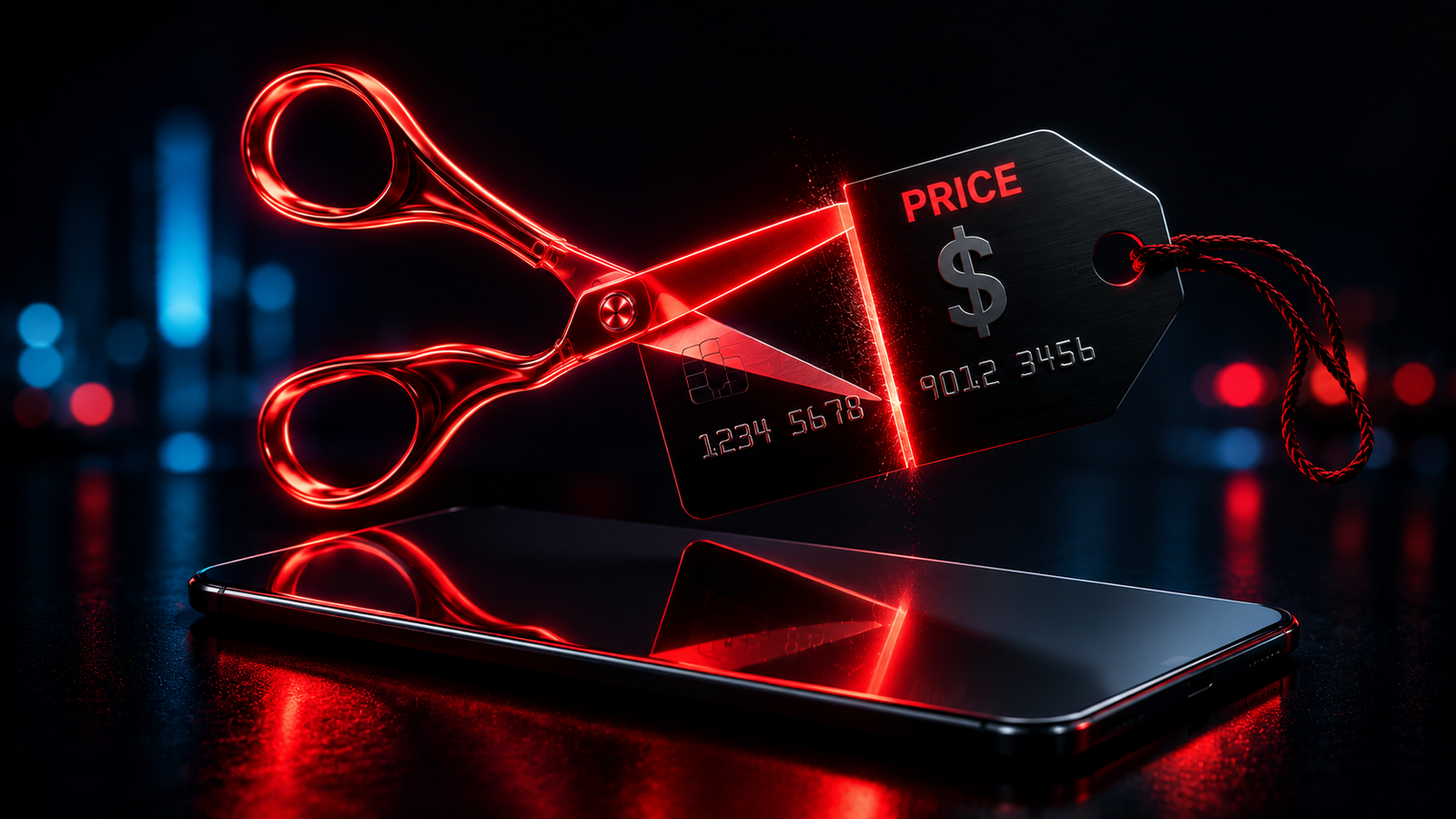
And then, right next to the checkout button, you see the magic words: No Cost EMI — ₹6,600 per month for 12 months.
Suddenly, the emotional brain takes over. Your brain doesn’t see “₹80,000” anymore. It sees “₹6,600.” It looks like a subscription, not a debt. It feels incredibly manageable. After all, the bank is offering interest-free payments, right? It’s almost like they’re doing you a favor.
Wrong.
The No Cost EMI (and its global cousin, Buy Now, Pay Later) is one of the most brilliant psychological and financial traps ever designed. It is engineered to bypass your natural resistance to spending, slowly lock you into a cycle of permanent debt, and quietly drain your bank account through fees you didn’t even notice.
If you want to protect your future cash flow, you need to understand how the math actually works behind the screen.
The Mirage of the “Free” Upgrade: How It Actually Works
Let’s establish the first rule of global finance: No financial institution is a charity.
Banks do not lend you money for twelve months for free. If they aren’t charging you interest, they are getting their pound of flesh from somewhere else. The “zero-percent” label is simply a clever rebranding of the cost.
There are two primary ways banks and retailers make money on a No Cost EMI:
1. The Upfront Discount Trick
When you buy a product on a zero-interest scheme, the retailer secretly gives a “discount” to the bank equal to the interest you would have paid.
- The Math: If the phone costs ₹80,000 and the actual interest rate is 15%, the retailer sells the phone to the bank for ₹70,000.
- The Trap: The bank then charges you the full ₹80,000 over 12 months. Mathematically, you are still paying the interest—it has just been subtracted from the “original” price, which means you missed out on a cash discount you could have had if you paid upfront.
2. The Processing Fee Leak
Almost every zero-interest transaction comes with a “nominal” processing fee of ₹199 or ₹299. It sounds small, but when you add up the GST (Goods and Services Tax) on that fee and the actual interest processing, you are already paying a premium just to initiate the loan.
The Silent Drain: Why Your Future Cash Flow is Being Cannibalized
The real danger of the No Cost EMI isn’t the upfront fees. It’s what it does to your psychology.
When you buy a product on credit, you are borrowing from your “Future Self.” You are committing your future salary—money you haven’t even earned yet—to pay for a gadget you are using today.
The “Subscription” Trap
Because the monthly payment looks small, we tend to stack them.
- You buy a phone: ₹5,000/month.
- You buy a watch: ₹2,000/month.
- You buy a refrigerator: ₹3,000/month.
- You book a holiday: ₹4,000/month.
Individually, each one felt like “just a few thousand rupees.” But on the 1st of the month, your bank account hits you with a total auto-debit of ₹14,000.
Suddenly, your disposable income is gone. You are living paycheck to paycheck, not because your rent is high, but because you’ve death-by-a-thousand-cutted your own salary. You have no margin for emergencies, no room to invest, and no freedom to say “No” to a toxic job because you are chained to your monthly mandates.
The 30% Cash Rule: Reclaiming Your Purchasing Sanity
If you want to escape this cycle, you need to build a simple, non-negotiable rule into your personal finance system.
The “Can I Afford It?” Test:
If you cannot buy the item in Full Cash (or debit) right now without affecting your emergency fund, you cannot afford it. Using an installment plan to buy something you can’t afford is financial denial.
The Strategy of Friction:
The next time you are tempted by an installment option, use these three boundaries:
- Calculate the Cash Discount: Ask the retailer, “What is the absolute best price if I pay in full cash today?” Often, the cash discount is larger than any benefit you get from the installment scheme.
- The “Two-Month” Delay: If you want a non-essential luxury item (like a gadget or designer clothes), force yourself to save the monthly installment amount in a separate account for three months before you buy it. If you can do that without stress, buy it in full.
- The GST Warning: Remember that in India, even if the interest is subsidized, you still pay an 18% GST on the interest component of the EMI. This is a direct, non-refundable cost that goes straight out of your pocket.
Frequently Asked Questions (FAQs)
Q: Does using No Cost EMI damage my credit score (CIBIL)?
A: Not if you pay on time. However, every time you take an installment plan, it is registered as a “Consumer Durable Loan” on your credit profile. If you have 5 or 6 of these active at the same time, future lenders (like home loan banks) might view you as a “high-risk” borrower who relies too heavily on short-term credit.
Q: Are there any situations where No Cost EMI is actually good?
A: Yes, but only if you already have the full cash sitting in a high-yield account. For example, if you have ₹1 Lakh in an FD earning 7% interest, and you take a zero-interest EMI of ₹1 Lakh while keeping your cash in the FD, you are technically making a small profit on the difference. But this requires extreme discipline.
Q: What is the difference between BNPL (Buy Now Pay Later) and EMI?
A: BNPL is usually for smaller amounts (under ₹10,000) with shorter repayment cycles (15-30 days) and is managed by fintech apps. EMIs are structured bank loans over 3 to 24 months. Both use the same psychological trick of making high prices look small.
Value over Convenience
Technology has made spending seamless. The banks have made debt invisible.
But the path to true financial freedom is not about convenience; it’s about control. Every time you refuse a “zero-percent” trap and choose to wait, save, and buy in full, you are reclaiming ownership of your future.
Don’t let a slick checkout button dictate your monthly budget. Buy what you can afford, save what you can’t, and keep your future self free.